Why Łódź Is Called the Polish Manchester
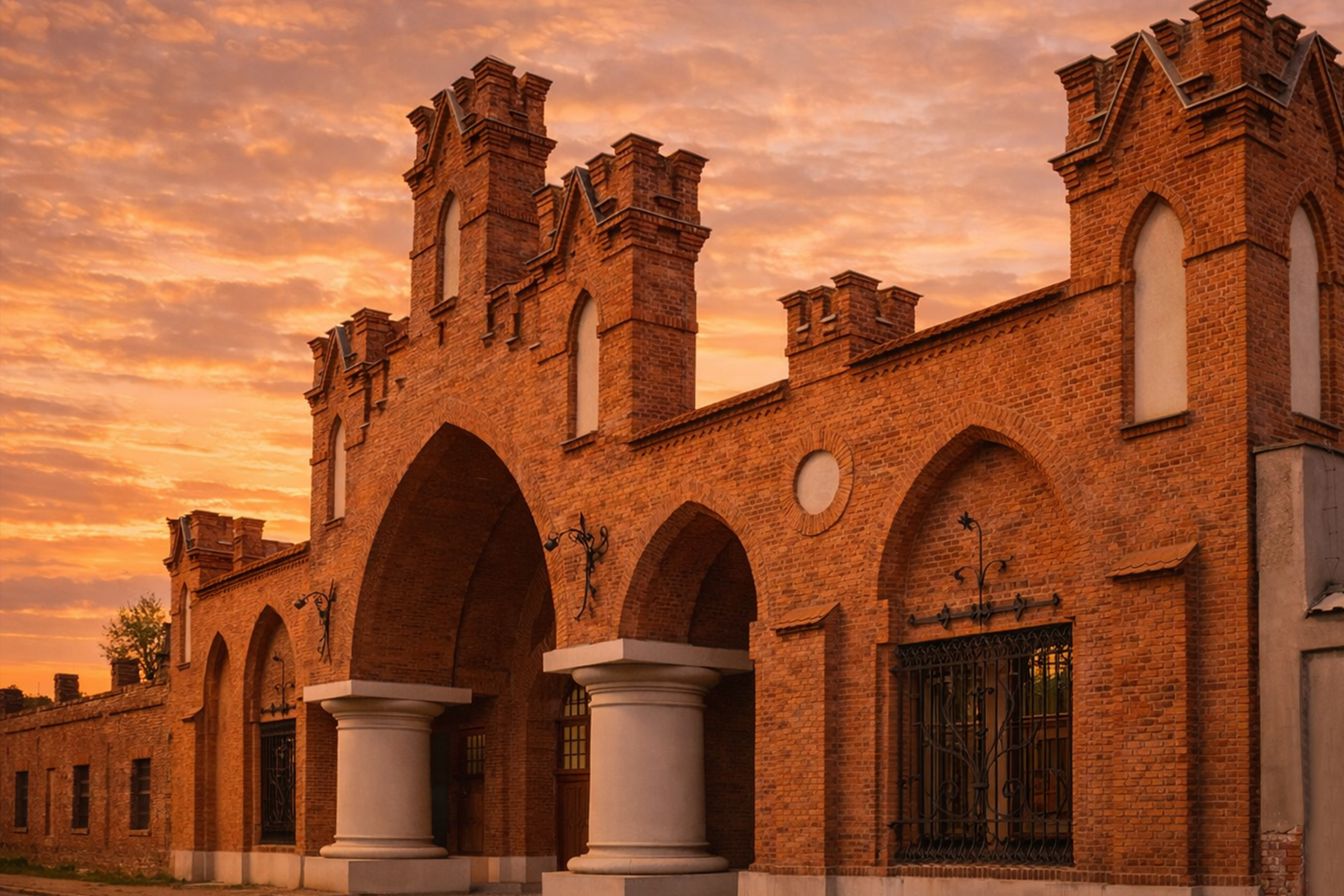
The nickname “Polish Manchester” is not a poetic exaggeration.
It reflects one of the most rapid and remarkable urban transformations in 19th-century Europe.
Today, Łódź is considered one of the most authentic industrial cities in Poland. The phrase “Polish Manchester” is frequently used in historical descriptions of the city’s extraordinary textile expansion and economic growth during the 19th century.
To understand this comparison, one must look at Łódź not as a tourist destination, but as an industrial phenomenon.
A Planned Industrial Experiment
At the beginning of the 19th century, Łódź was a modest settlement with little economic significance. Its transformation began after 1820, when the authorities of the Kingdom of Poland (then under Russian control) designated it as a factory settlement.
Incentives were offered to skilled weavers and industrial entrepreneurs — many of them from German-speaking regions. Land was granted, infrastructure was developed and tax privileges encouraged investment.
What followed was explosive growth.
Between 1820 and 1914, the population increased from a few hundred inhabitants to over half a million. Few European cities experienced such dramatic demographic and industrial expansion in such a short period of time.
The Textile Empire
Like Manchester in England, Łódź became synonymous with textile production.
Vast factory complexes emerged along newly laid-out streets. Red-brick industrial architecture dominated the skyline. Chimneys became symbols of prosperity and power.
Entrepreneurs such as:
-
Karl Scheibler
-
Izrael Poznański
-
Ludwik Grohman
built not only factories, but entire industrial-residential complexes, workers’ housing estates and private palaces that rivalled aristocratic residences.
Industrial wealth reshaped the physical and social structure of the city.
Architecture as a Statement of Power
The comparison with Manchester extends beyond economics — it is visible in urban form.
Łódź developed:
-
Monumental factory complexes
-
Neo-Renaissance and eclectic palaces
-
Dense workers’ housing districts
-
Broad industrial avenues
Unlike medieval Polish cities centred around market squares and churches, Łódź grew along Piotrkowska Street — a long, linear urban axis reflecting its planned industrial expansion.
Architecture in Łódź tells a story of ambition and competition.
Factory owners expressed their status not only through production output, but through façades, ornamentation and scale.
A Multicultural Industrial Society
Another similarity to Manchester was social complexity.
Łódź was a city of migrants. Poles, Germans, Jews and Russians lived and worked side by side, contributing to a dynamic industrial society.
By the late 19th century, Łódź was one of the most densely populated industrial centres in Europe — a place of opportunity, but also of stark inequality and social tension.
The nickname “Polish Manchester” therefore reflects both economic success and the broader social dynamics of industrial modernity in Central Europe.
Industrial Decline and Urban Transformation
Like many European industrial cities, Łódź experienced decline in the late 20th century. Factories closed, unemployment rose and large areas of the city faced structural challenges.
However, unlike cities that demolished their industrial heritage, Łódź preserved much of its 19th-century fabric.
Today, former textile factories have been transformed into:
-
Cultural centres
-
Museums
-
Creative industry hubs
-
Boutique hotels and lifestyle spaces
Complexes such as Manufaktura illustrate how a former textile empire can be revitalised while maintaining its architectural identity.
Łódź remains one of the most distinctive examples of a preserved 19th-century industrial city in Poland.
More Than a Nickname
Calling Łódź the “Polish Manchester” helps visitors understand its economic roots — but the city’s story goes further.
Unlike Manchester, Łódź developed within a different political context, under partition and foreign rule. Its multicultural composition and later wartime history add additional layers to its identity.
The comparison is a starting point — not a conclusion.
To truly understand the history of the Polish Manchester, one must explore the streets, courtyards and factory complexes where industrial ambition shaped everyday life.
Discover the Industrial Story with Context
Understanding why Łódź is called the Polish Manchester requires more than reading about textile production. It requires walking through red-brick factory courtyards, examining architectural details and connecting economic growth with the biographies of industrial families.
Private industrial heritage tours can be structured around:
-
The rise of textile empires
-
German and Jewish industrial families
-
Workers’ housing districts
-
Urban planning and architectural evolution
-
The transformation from industrial powerhouse to creative city
Each itinerary is individually designed, offering historical depth without standardised group-tour narration.
If you wish to explore the Polish Manchester with expert guidance and contextual insight, I would be pleased to design a private industrial heritage experience tailored to your interests.
Explore the Industrial Legacy of Łódź
Comments
-
I am grateful for the opportunities you provide to everyone who wants to learn basic and advanced defense skills. Every evening I have to make my way through a dangerous area, and your course is a real rescue for me.
0 -
This course includes everything you may need to learn basic self-defense skills. As a professional fighter, I recommend you to check out the video tutorials of Bradley Roberts. He is the acknowledged and licensed professional in self-defense and martial arts. With his guidance, you can benefit from learning how to defend yourself.
0


Leave your comments