Jewish Heritage in Łódź – What Makes It Unique?
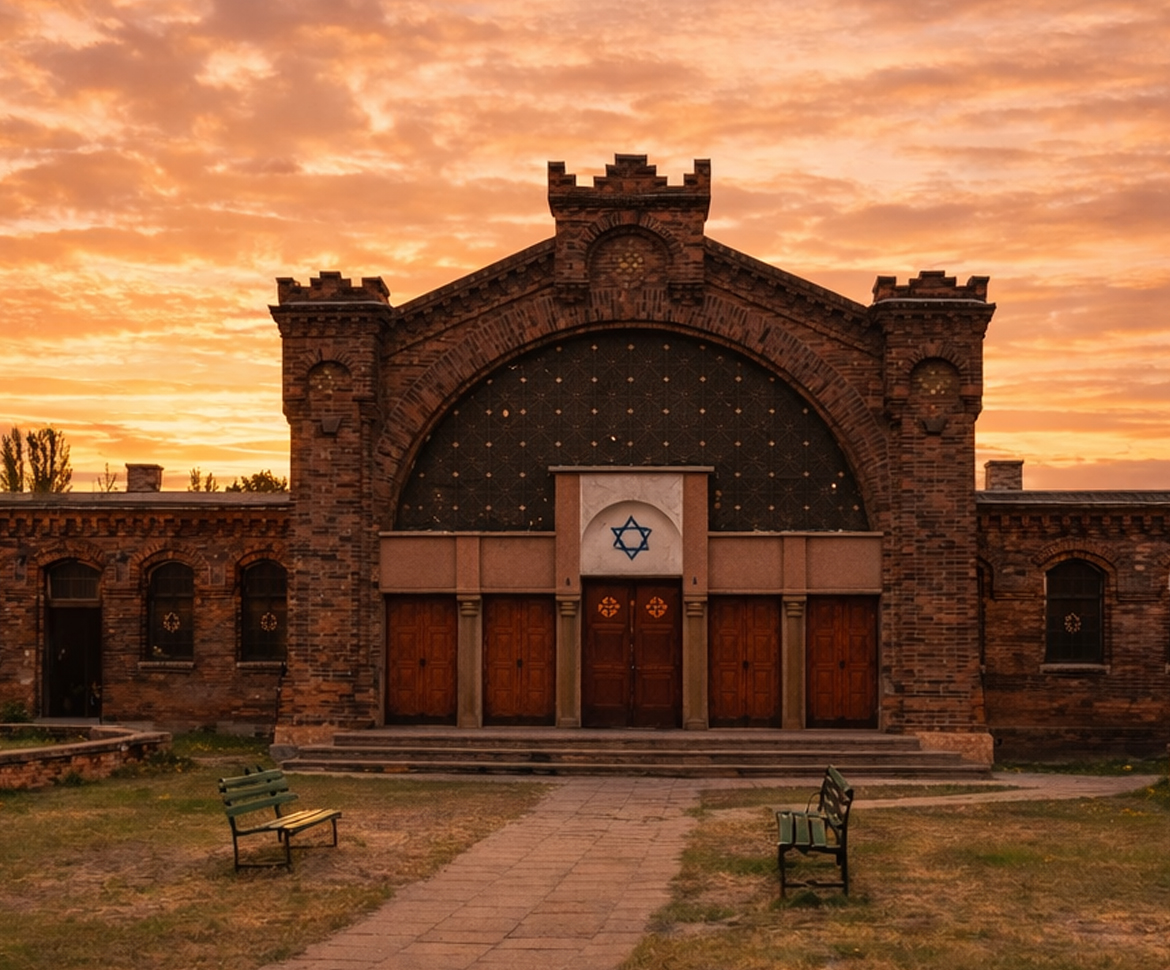
Łódź is home to one of the most significant Jewish heritage sites in Poland, yet it remains less internationally recognised than Kraków or Warsaw. For travellers seeking depth and historical context, Jewish heritage in Łódź offers a uniquely modern, industrial and multicultural perspective on Jewish life in Central Europe.
Unlike medieval Jewish quarters preserved as historic districts, Jewish Łódź developed primarily in the 19th century — during the rapid industrialisation that transformed the city into the so-called Polish Manchester.
Understanding Jewish heritage in Łódź means understanding modern European history.
Unlike medieval cities with centuries-old Jewish quarters, Łódź emerged as a major Jewish centre relatively late, during the rapid industrial expansion of the 19th century. Its Jewish community was not shaped primarily by royal privilege or medieval trade routes, but by modern industry, entrepreneurship and migration.
This difference fundamentally shaped the character of Jewish life in the city.
A Community Built on Industry and Opportunity
At the beginning of the 19th century, Łódź was a small settlement. Within a few decades, it became one of the fastest-growing industrial cities in Europe. Economic opportunity attracted Jewish families from across the Russian Empire, Prussia and Galicia.
By the late 19th century, Jews constituted nearly one third of the city’s population and played a decisive role in shaping its economy.
Industrialists such as Izrael Poznański built vast textile empires, whose architectural legacy still defines the city today. Jewish entrepreneurs were factory owners, merchants, bankers, doctors, educators and philanthropists.
Jewish heritage in Łódź is therefore inseparable from industrial heritage.
A Multicultural Urban Environment
Łódź was a rare urban experiment. Poles, Jews, Germans and Russians lived and worked side by side, contributing to a complex and dynamic social structure.
Jewish life included:
-
Religious orthodoxy and Hasidic courts
-
Secular intellectual movements
-
Zionist organisations
-
Bundist and socialist activism
-
A vibrant Yiddish press and theatre scene
This diversity makes Jewish history in Łódź particularly compelling for heritage travellers and researchers.
The Łódź Ghetto – A Distinct Chapter of Holocaust History
During the German occupation in World War II, the Litzmannstadt Ghetto was established in Łódź. Unlike the Warsaw Ghetto, it functioned for an extended period and was heavily integrated into forced industrial labour.
The ghetto became an organised system of production under extreme conditions — a tragic and complex chapter of Holocaust history in Poland.
Sites such as Radegast Station preserve the memory of deportations, while the former ghetto area still reflects the spatial structure imposed during the occupation.
Understanding the Łódź Ghetto requires context, nuance and historical sensitivity.
One of the Largest Jewish Cemeteries in Europe
Jewish Cemetery in Łódź is one of the largest Jewish cemeteries in Europe and a monumental archive of community life.
Within its vast grounds, visitors can observe:
-
Mausoleums of industrial magnates
-
Rabbis’ graves
-
Modest family plots
-
Symbolic and artistic funerary forms
The cemetery reflects the scale, diversity and social hierarchy of pre-war Jewish Łódź.
It is both a site of remembrance and a powerful historical document.
What Makes Jewish Heritage in Łódź Unique?
Jewish heritage in Łódź differs from other Polish cities because it is:
-
Closely connected to industrial modernity
-
Embedded in a multicultural urban structure
-
Less commercialised and more authentic
-
Architecturally integrated into the city
-
Marked by both rapid growth and profound tragedy
It is not confined to one preserved quarter.
It is woven into the city’s entire fabric.
Discover Jewish Heritage with Historical Depth
Exploring Jewish heritage in Łódź requires more than visiting memorial sites. It involves connecting biographies, architecture, economic history and social movements into a coherent narrative.
Private Jewish heritage tours in Łódź can be structured around:
-
Pre-war Jewish life
-
Industrial magnates and entrepreneurship
-
The history of the Łódź Ghetto
-
Cemetery visits
-
Genealogy-focused exploration
Each program is individually designed, offering historical insight and cultural sensitivity.
If you are interested in discovering Jewish heritage in Poland beyond the obvious destinations, Łódź offers a profound and meaningful perspective.
Plan Your Jewish Heritage Experience in Łódź
Comments
-
I doubt that simple discussion can change anything in our country, but if you really have an idea to share, this is your chance to shake our government up. It's quite a good initiative, but to my mind, it will only work when all results of discussion are formed into real suggestions for statesmen.
0 -
I hope this project will change something in our social and political state because many of our state's residents are really fed up with the current situation including the world economic crisis, poverty, overpopulation etc.
0


Leave your comments